For anyone who’s dropped into Fortnite in 2026, the feel of a trigger pull is something they might take for granted. But beneath that instant feedback lies a decade-long tug-of-war between two philosophies of gunplay. Fortnite’s combat identity has shifted so many times that latecomers could be forgiven for thinking the island was built on quicksand. Yet the single most seismic shift—the return of hitscan weapons in Chapter 6 Season 1—still echoes through every lobby today. Understanding that moment, and the delicate balancing act it triggered, is like learning why the steering wheel and pedals of a car are placed exactly where they are: once you get it, the whole driving experience feels deliberate, not accidental.
Hitscan: A Digital Finger in the Target’s Eye
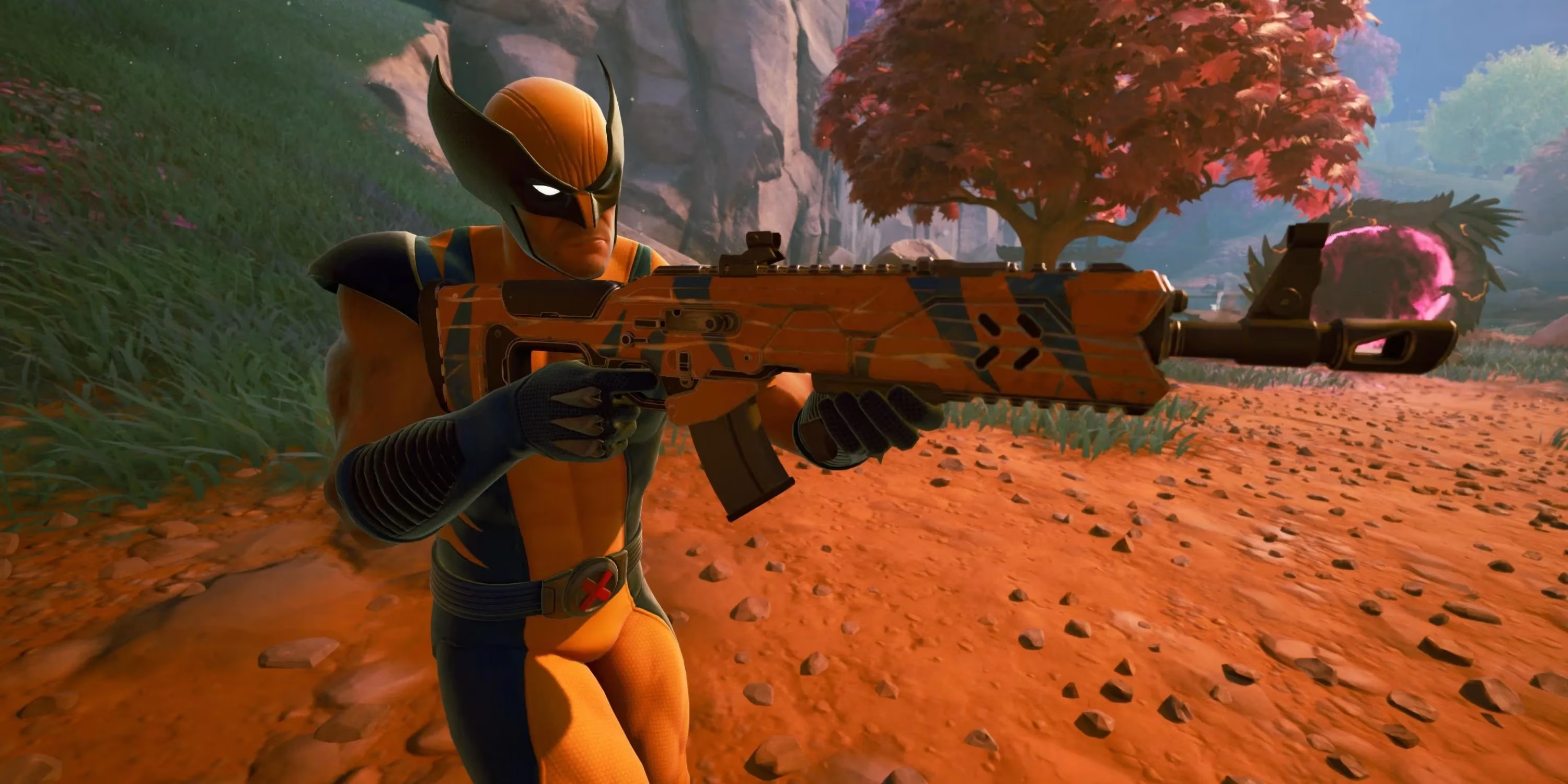
In the grand taxonomy of shooter mechanics, hitscan is the digital equivalent of a laser pointer. There is no physical bullet, no travel time, and no gravity pulling down on the shot. When a player’s reticle settles on a foe and they press the trigger, damage registers at the exact same instant the server receives the input. The only obstacles are bloom and recoil—the same variables someone would fight against in an old-school arcade light-gun cabinet. That simplicity made hitscan the default joy of early Fortnite, a logic lifted straight from arena shooters where pixel-perfect aim was the only currency that mattered.
But simplicity has a dark twin: predictability. Because hitscan removes the need to lead targets or compensate for distance, a skilled player with a steady crosshair can lock down an entire sightline. During Chapter 5, Epic Games decided to experiment with something more nuanced. Like a chef replacing a microwave with a wood-fired oven, they pulled hitscan out of the kitchen entirely—and the community’s reaction was more than a little scorched.
Projectile Weapons: The Bullet That Refuses to Be Ignored
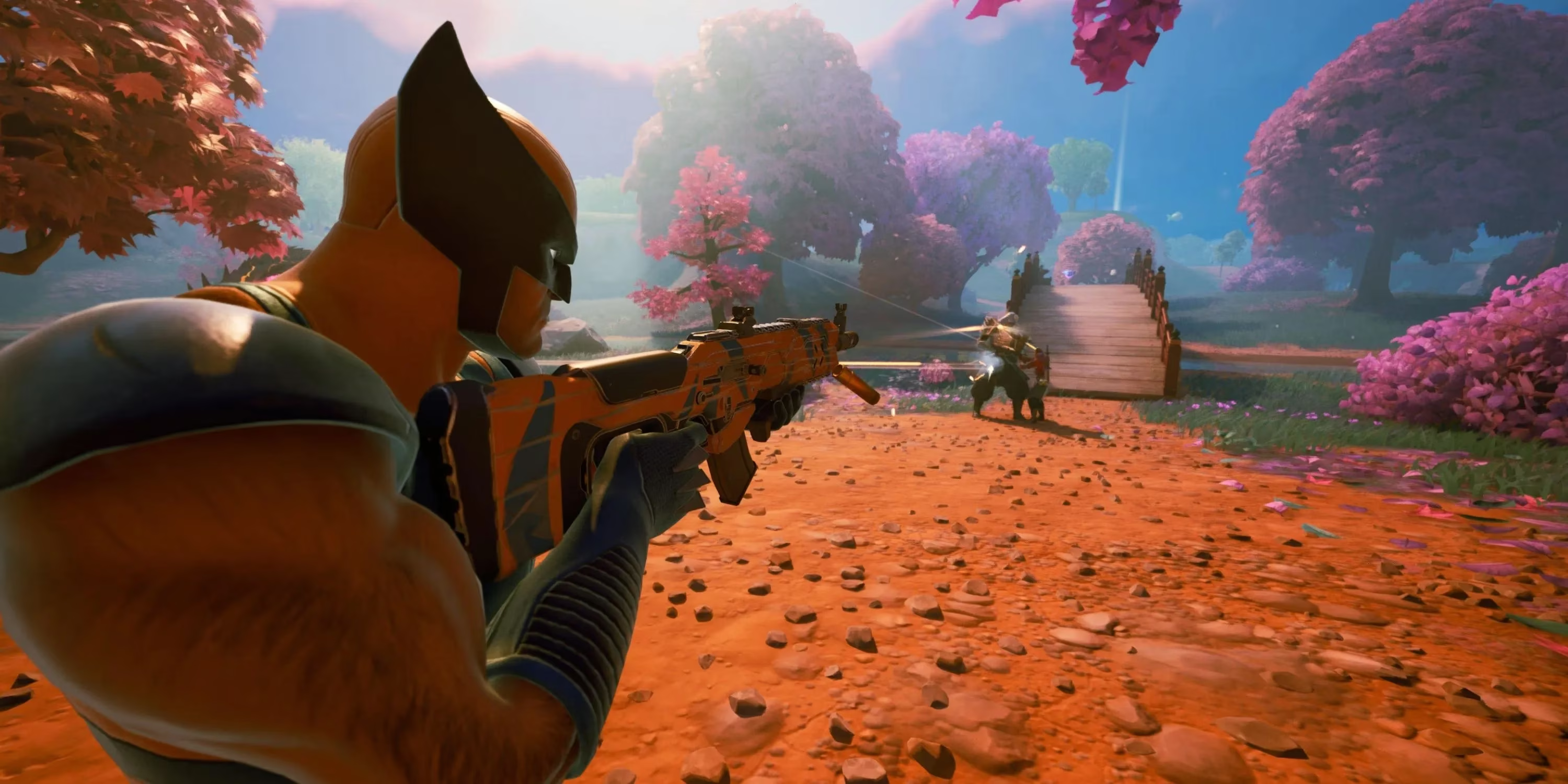
Projectile-based weapons, by contrast, treat every shot like a real-world object with weight, drag, and a stubborn relationship with gravity. A sniper round fired from a bolt-action in Chapter 5 wasn’t a ray of instant death; it was a tiny, fast-moving ball that had to cross the map and drop along an arc. Players learned to aim above a target’s head at long range and ahead of a sprinting opponent. Mastering that curve felt less like clicking heads and more like learning to toss a rock into a bucket moving on a conveyor belt—rewarding, but exhausting over a hundred matches.
That exhaustion had consequences. Casual players began peeling away, finding the mental math of bullet drop too much like homework. Build fights turned into physics experiments. By the time Chapter 5 was winding down, the data was clear: the player base was craving a return to more straightforward combat. Fortnite pulled off what many called its own “back to basics” miracle when Chapter 6 Season 1 launched with every single weapon—assault rifles, shotguns, SMGs, even the then-new melee alternatives—operating on full hitscan.
The Afterparty and the Slow Pendulum Swing
The immediate aftermath of Chapter 6 Season 1 felt like a dam breaking. Players who had spent a year squinting at distance markers and guessing bullet speed suddenly only had to worry about bloom. Aim-training routines simplified. Pump-shotgun duels, once a dance of prediction, became pure reflex checks. The change was so popular that Epic kept the all-hitscan model through the remainder of Chapter 6 and into the early months of Chapter 7. But like any pendulum, the competitive scene eventually started to groan. Without projectile travel time, long-range engagements turned into pixel-peeking staring contests. Skilled snipers demanded something that would separate an aimbot-like cursor placement from genuine field-craft.
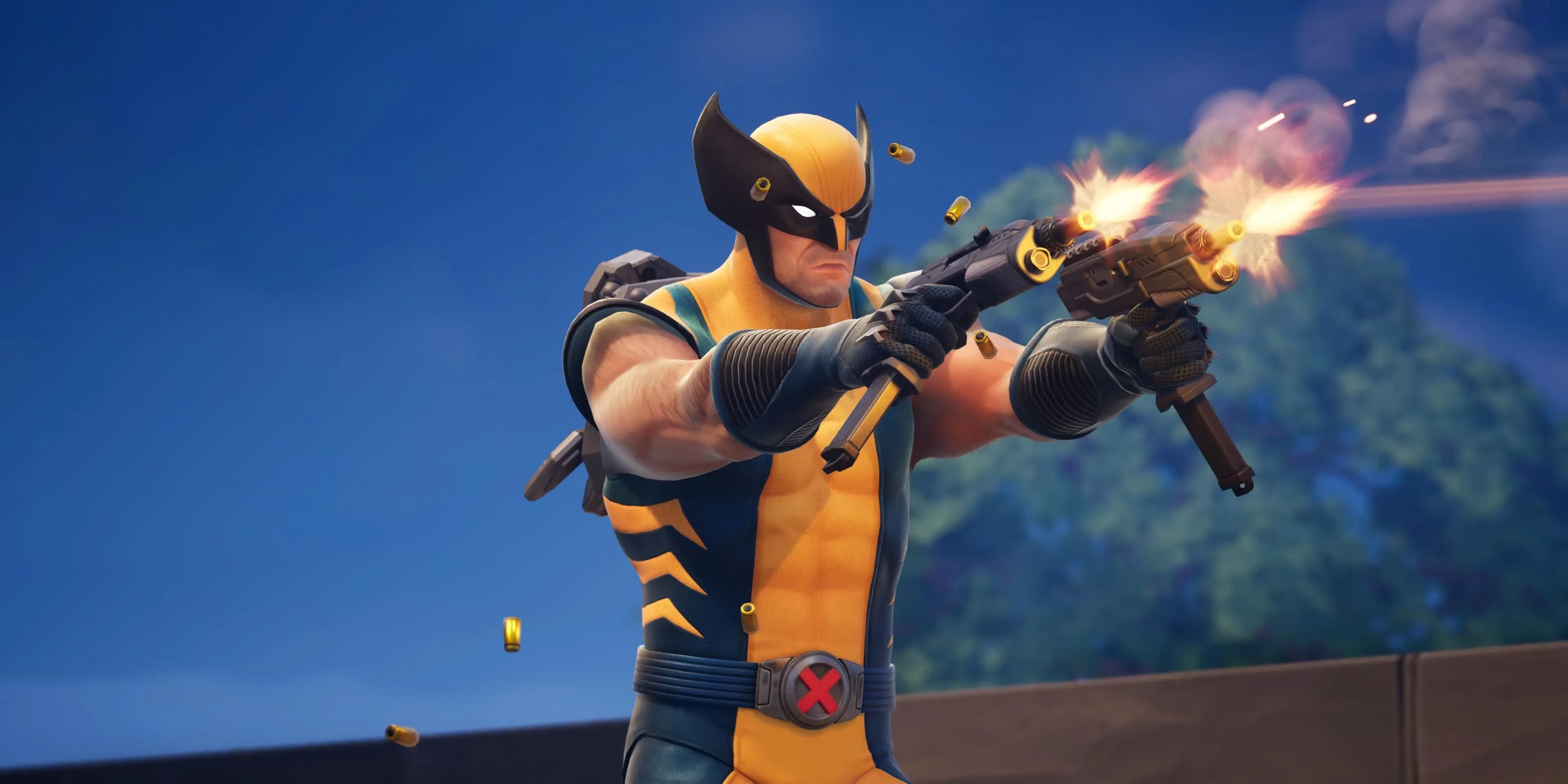
So in 2026, Fortnite exists in a clever hybrid state—a design compromise that feels a bit like the two-handed engine of a modern hybrid car. Automatic weapons, pistols, and shotguns continue to run on hitscan, preserving the snappy, casual-friendly flow that brought millions back. But certain designated weapons, particularly scoped sniper rifles and the reintroduced DMR line, operate with full projectile physics. This split allows veteran marksmen to calculate bullet drop and lead their targets, earning kills that feel earned rather than gifted by a server tick. It’s a subtle balancing act: new players can spray and pray with an SMG and still get results, while a patient sniper perched in a tower can solve the geometry puzzle of a moving target and watch their shot arc home.
The lesson Fortnite taught the industry is that a game’s shooting model isn’t just a data point on a settings screen; it’s an emotional contract with the player. Hitscan delivers instant gratification—the digital equivalent of snapping your fingers and seeing a light turn on. Projectile combat offers delayed payoff, the satisfaction of a paper plane that lands exactly where you aimed after a long, floaty trip. By 2026, Fortnite has learned to honor both contracts, giving players the choice of which muscle they want to exercise: raw twitch speed or measured ballistic instinct.