I remember last year’s Fortnite: OG event like it was yesterday—even though it’s been nearly two years now. The day Chapter 1’s map materialized back in Battle Royale, I felt a jolt of pure, unfiltered excitement I hadn’t experienced in Fortnite since middle school. Dusty Depot, Loot Lake, the old storm patterns—everything was just as I remembered. I wasn’t alone. On November 4, 2024, a staggering 44.7 million players logged in, with a concurrent peak of 5 million. For one glorious month, dropping from the Battle Bus felt sacred again. The temporary nature of it all made every Victory Royale taste sweeter. We knew the map would vanish on December 2, so we played obsessively, terrified of missing out. That collective urgency turned the event into a phenomenon. Epic Games saw the numbers and gave us what we thought we wanted: Fortnite: OG as a permanent mode, launching December 6, 2024. A whole year of reliving Chapter 1, season by season.
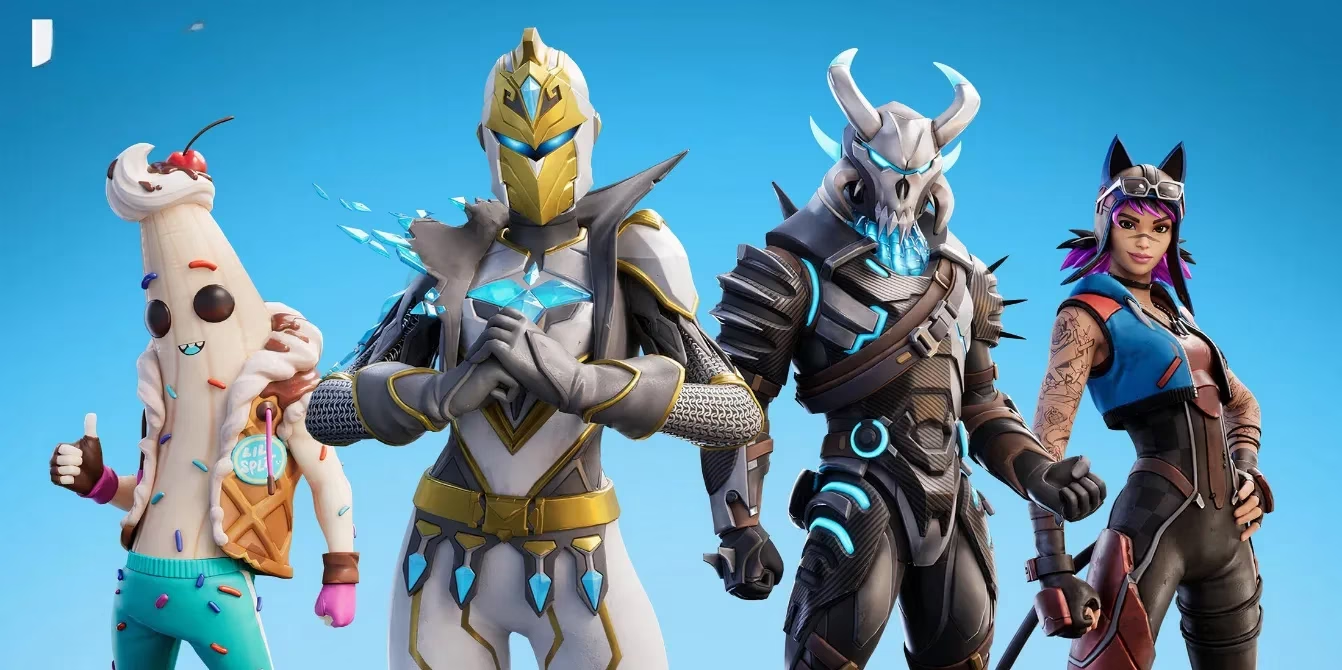
I dove in headfirst. Season 1 dropped, and it was bliss—pure, unadulterated nostalgia doused in simpler mechanics. I grinded until my eyes burned, chasing that 2018 high. But as the weeks blurred together, a restless thought began gnawing at me: did Epic really think unlimited access could replace the thrill of a fleeting event? By the time Season 5 rolled around, my squad had dwindled, and the lobbies felt… hollow. The magic was evaporating. OG mode wasn’t just competing against other battle royales like Warzone or Apex; it was cannibalizing Fortnite’s own player base, siphoning attention away from the dynamic Chapter 6 map. When you can queue into a perfect recreation of Season 7 anytime you want, why bother learning the newest collab-infested, metaverse-heavy update?
The answer, I’ve realized, is that nostalgia is a finite resource. Fortnite: OG’s rigid structure—cycling through the same ten seasons on repeat—turned a sacred memory into a treadmill. After experiencing the entire Chapter 1 catalog in a single year, what’s left? By December 2025, I had unlocked every OG battle pass skin twice over. The final circle at Retail Row felt less like a pilgrimage and more like a chore. The mode’s predictability smothered the very spontaneity that made the original seasons so beloved. Back in 2018, we didn’t know a rocket would blast out of the sky or that Kevin the Cube would roll into Loot Lake. OG mode’s scripted rotation stripped away that uncertainty, leaving only sterile replicas. I started longing for the days when the map simply disappeared after a few weeks, forcing me to cherish every moment.
Epic’s strategy also created an identity crisis. Fortnite’s heartbeat has always been evolution—weekly updates, live events, seasons that reshape the map entirely. The permanent OG mode acts like a roundabout, endlessly looping the past while the main Battle Royale freeway races forward. Where’s the excitement in that? My Chapter 6 lobbies are now infested with bots because half the community is busy grinding their third pass through Season 3. Even the zero build variant, which gave veterans like me a fresh spin initially, can’t hide the fact that we’re just going through the motions. The limited-time OG event of 2024 understood something crucial: nostalgia burns brightest when it’s fleeting. Make it permanent, and you extinguish the flame.
I still log into OG mode occasionally—out of habit, not passion. I’ll drop at Tilted Towers, crack a few kills, and then wonder why my heart rate isn’t spiking like it used to. Maybe that’s the cruelest irony: in a desperate bid to preserve the past, Epic Games robbed it of its power. The 44.7 million of us who showed up for one last dance didn’t want an eternal party; we wanted a beautiful goodbye. Now every day feels like a muted replay, and I can’t help but ask: when everything is OG, is anything truly special anymore?