Back in 2018, nobody would have guessed that a battle royale game about building snipers’ nests would eventually host virtual concerts, brand-sponsored toothbrush adventures, and thousands of player-made worlds. Yet here we are in 2026, and Fortnite has pulled off one of the most dramatic identity shifts in gaming history. The island that once revolved around a shrinking storm now feels a lot like a sprawling digital playground. And if that description reminds you of Roblox, it’s absolutely meant to.
What observers are witnessing isn’t just coincidence. Fortnite is deliberately reshaping itself into a creator-driven metaverse, and every update since Creative 2.0 has pushed it closer to the model that made Roblox a household name among Gen Alpha. The difference? Epic’s version might end up being the one that truly breaks the age barrier.
How Fortnite Transformed Its Own DNA
For the first five years, Creative Mode was something of a side experiment. Players could build their own islands, sure, but the tools felt limited and the audience mostly ignored them. That changed dramatically in 2023 when Epic dropped Creative 2.0 and the standalone Unreal Editor for Fortnite, commonly called UEFN. Suddenly, creators weren’t just rearranging prefab walls; they had the full muscle of Unreal Engine 5 at their fingertips.
Around the same time, Fortnite launched its LEGO survival block and Festival Mode, both of which demonstrated that the platform could handle wildly different genres on the same technical skeleton. The message was clear: the engine wasn’t just for shooting anymore. Today, three years later, that message has become the entire identity of the platform. You can log in right now and bounce between a roleplaying high school, a five-night horror escape room, a tycoon simulator about running a pizza joint, and a full-blown recreation of a classic Roblox obby—all without ever loading the core battle royale map.
Where the Roblox Echoes Become a Roar
Open the discovery page in 2026 and the similarity to Roblox is no longer subtle. The genres are practically a carbon copy. Fortnite Creative now hosts an endless supply of obstacle courses (obbies), team skirmish arenas, deathruns packed with spinning lasers, and bed wars modes that have become a category unto themselves. Some creators even straight-up recreate popular Roblox games, down to map layouts and item placement, and nobody blinks an eye. It’s become a bit of an open secret that the two platforms share a symbiotic inspiration pipeline.
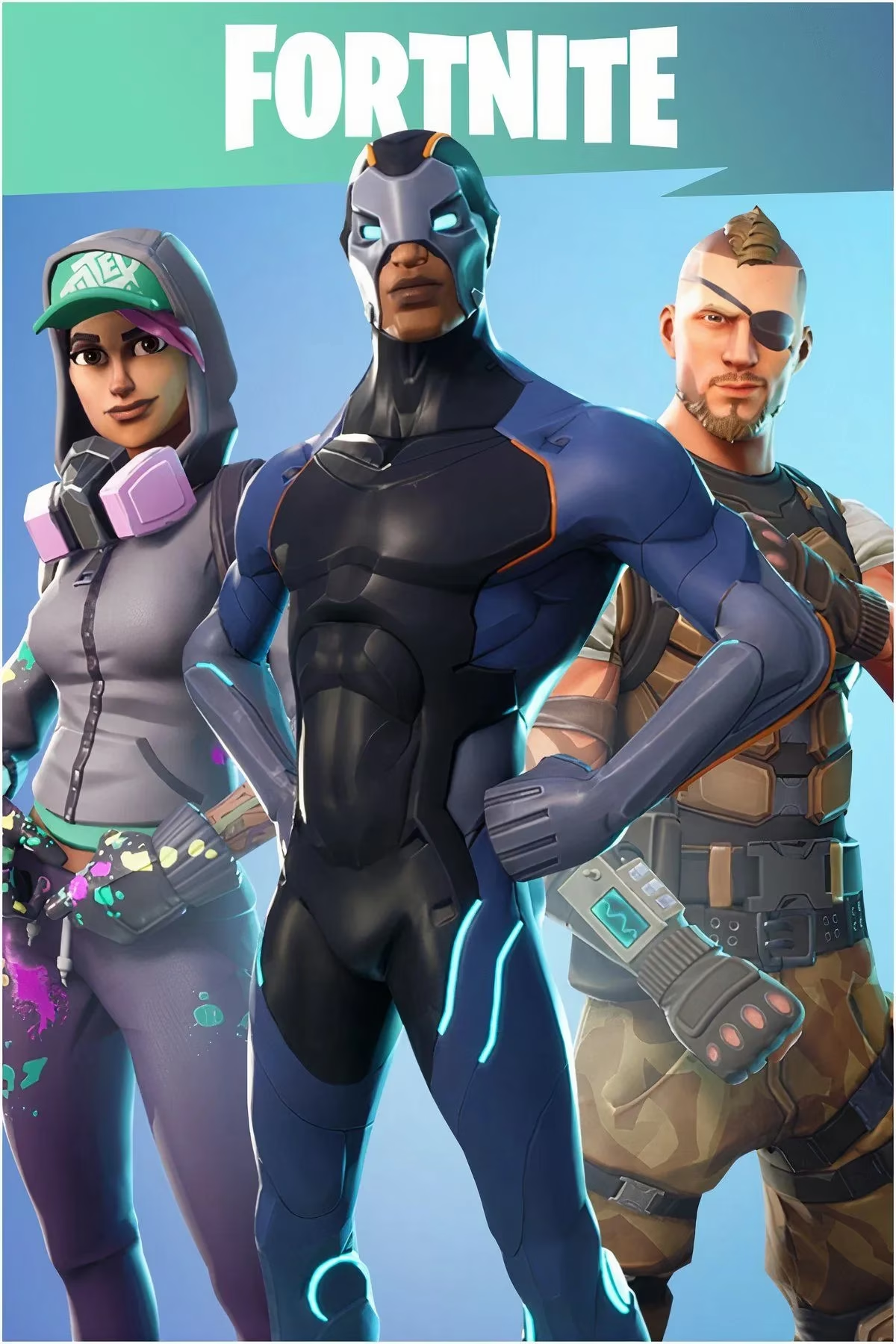
The crossover goes deeper than gameplay. Both titles have turned into online social venues where young people don’t just play—they hang out. Concerts have become a staple: Marshmello, Ariana Grande, and Eminem on the Fortnite side; David Guetta, Twenty One Pilots, and Lil Nas X on the Roblox side. In 2025 we even saw a joint in-game fashion show sponsored by a luxury streetwear brand that ran simultaneously across both platforms. For a generation that treats digital spaces as naturally as physical ones, the line between a game and a social network has dissolved completely.
Following the Money (and the Juice Boxes)
The shift isn’t just about giving players more to do. Epic is chasing the same golden goose Roblox found years ago: a young audience that traditional advertising can’t reach anymore. TV commercials have lost their grip on kids who grew up skippable. But a playable branded experience inside a game they already live in? That’s marketing gold. Companies from Honda to Oral-B have built sponsored Fortnite islands, and while a racing mini-game about electric vehicles sounds absurd at first, the logic is brutally effective. Plant the brand seed early, and it blooms when those kids get their driver’s licenses.
There’s a key difference between a TV ad and a Fortnite toothpaste tycoon, though: nobody has to play the tycoon. It has to earn every visitor by being genuinely fun, or kids will bounce back to bed wars in under ten seconds. That’s why the quality of sponsored content keeps climbing. Brands are hiring actual UEFN studios to craft experiences that can stand next to community-made hits. The result is a marketplace where an update from a car company can sit comfortably alongside a viral horror maze made by a 17-year-old in Denmark.
The Age Gap That Gives Fortnite an Edge
Where Fortnite has a massive advantage is in who exactly is doing the playing. By 2026, surveys consistently show that a large chunk of the audience—well over 60%—falls between 18 and 34 years old. Roblox, by contrast, still sees more than half its players sitting under 16. That doesn’t make one platform better, but it does mean Fortnite can court brands and experiences that need an older demographic without losing the younger crowd. A Gundam crossover or a full-fledged sci-fi RPG inside Fortnite can pull in adults who have never downloaded Roblox.
This wider reach also helps Epic avoid the trap of being pigeonholed as a “kids’ game.” The social stigma that sometimes follows Roblox doesn’t stick quite as firmly here, because the parent who plays Zero Build on the weekend already understands the platform. When that parent then sees their child playing a creative island about renewable energy sponsored by a solar company, the whole loop feels organic rather than predatory.
Where Both Are Heading Next
Looking ahead through the rest of 2026, the trajectory is locked in. Roblox continues to polish its infrastructure and expand into workplaces and educational spaces. Fortnite, meanwhile, is pushing UEFN updates that make the barrier to creation even lower while adding monetization tools that rival Roblox’s developer exchange. Creativity is now a legitimate career path on both platforms; the kid building obbies after homework today is the studio owner of tomorrow.
It’s not about one world eating the other. It’s about two giants moving in parallel and forcing each other to improve. The real winner is the creator community and the players who get to enjoy an infinite feed of weird, wonderful, and occasionally sponsored experiences. Fortnite no longer needs to sell a battle pass to keep people coming back. It just needs to keep the portals open—and judging by the sheer volume of new islands arriving every day, those portals aren’t closing anytime soon.