Fortnite’s ability to keep veterans grinding and newbies landing at Tilted Towers is nothing short of legendary. Fast forward to 2026, and the battle royale still dominates the cultural conversation—thanks in no small part to a series of moves Epic Games pulled back in late 2024 that were straight fire. From dusting off its own classic IP to diving headfirst into tactical shooter territory, Fortnite proved once again that it doesn’t just follow trends; it sets them. Let’s unpack how those power plays have aged like fine wine, becoming cornerstones of the contemporary Fortnite experience.
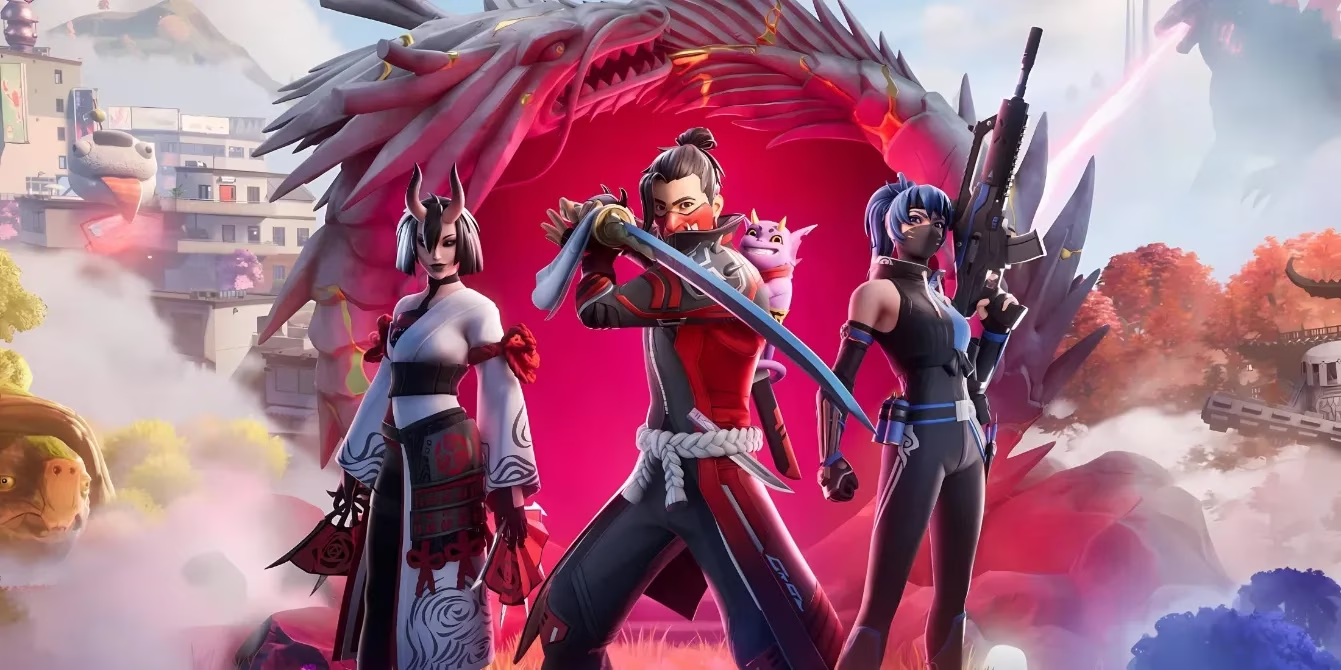
Unreal Tournament’s Samael and Garog Finally Hit the Item Shop
A storm of nostalgia swept through the island when Epic Games announced on December 10, 2024, that Samael and Garog—two hard-edged warriors from the 1999 arena shooter Unreal Tournament—would become playable skins. For years, loyalists had been scratching their heads, wondering why the studio kept its own legendary characters on the bench while dishing out crossover after crossover. The teaser clip that dropped on Fortnite’s social media said it all: Jonesy and Fishstick, chilling with kites and munchies, welcoming the newcomers in the most laid-back way possible. It was the ultimate “welcome to the party” moment.
The skins slotted right into the Gaming Series collaboration lineup, standing shoulder to shoulder with heavy hitters like Geralt of Rivia, Master Chief, Kratos, and Lara Croft. Almost overnight, the duo became a staple in the inventory of players who wanted to flex serious gaming cred. Even in 2026, rocking a Samael skin is a low-key flex that says “I was there when Epic finally respected its roots.” The move, which some fans noted took a full seven years for Epic to cross over with its own property, has aged into a symbol of the company’s willingness to reconnect with its heritage—and the hype hasn’t dimmed one bit.
Ballistic Mode: From Early Access Experiment to Tactical Titan
Just one day after the UT skins dropped, on December 11, 2024, Fortnite flipped the script entirely by launching Ballistic—a first-person, 5v5 tactical mode that had attackers scrambling to plant a Rift Bomb. The early access build was lean: a single map, a pared-back arsenal, and zero room for error. But the core loop was tighter than a gold SCAR’s bloom. Defenders had to hold the line while attackers tried to rip a hole in reality itself. It was gritty, methodical, and a total departure from the spray-and-pray chaos of battle royale.
Fast forward to 2026, and Ballistic has become its own beast. Player feedback shaped the mode into an ever-expanding playground—the map pool has grown from that solitary battlefield to five intricately designed arenas, each demanding its own set of lineups and rotations. Weapon balancing passes, operator-style gadgets, and sneaky wall-bang angles have turned Ballistic into a staple in competitive Fortnite tournaments and even a side attraction at in-person LAN events. What’s more, the promise that all existing cosmetics would carry over gave players the freedom to bust out their John Wick skin during a high-stakes defuse, exactly as shown in that cinematic teaser back in the day. It’s that kind of continuity, keeping it 100 with the player base, that has cemented Ballistic as much more than a side mode—it’s now a core pillar of the Fortnite ecosystem.
Collaboration Mania: The Hype Train Kept Rolling
Around the same window, the battle royale was already deep in its Marvel-themed season, and the Item Shop looked like a pop-culture multiverse. Crossovers with Across the Spider-Verse and Snoop Dogg had shoppers emptying their V-Bucks faster than you can say “reskin.” The Chapter 6 Season 1 battle pass cranked the crossover dial to eleven, bringing in Baymax from Big Hero 6 and the King of the Monsters himself, Godzilla. It was a clear message: Fortnite’s collaboration appetite was insatiable, and no franchise was too big or too niche.
Then came the juicy rumor that had the community buzzing—whispers of a Demon Slayer anime crossover slated for Chapter 6 Season 1. And you know what? It actually materialized, dropping Tanjiro and Nezuko skins into the mix shortly after the season launched. The anime crowd flocked to the game in droves, and the passionate pairing of Nichirin blade harvesting tools with build-fighting antics became an instant classic. Looking back from 2026, that collab set the bar for how anime integrations should be handled, paving the way for the Jujutsu Kaisen and Chainsaw Man waves that followed. The Unreal Tournament skins and Ballistic mode may have grabbed the spotlight in late 2024, but the constant drip of crossovers—including the rumored Doctor Doom 2099 from Marvel Rivals that eventually hit the shop—kept the Fortnite grapevine alive and kicking.
The Takeaway: A Blueprint for Staying on Top
Epic Games’ playbook during that chilly December of 2024 wasn’t just about short-term player spikes. It was a masterclass in balancing nostalgia with innovation. Honoring Unreal Tournament gave old-school fans a reason to cheer, while Ballistic mode courted the sweaty tactical FPS audience without alienating casual builders. The relentless collaboration schedule turned Fortnite into a digital museum of pop culture that keeps its collection updated year-round.
Two years on, logging into a 2026 lobby feels like a living testament to those decisions. The Samael and Garog skins still pop up in highlight reels, Ballistic matches regularly draw viewer counts that rival traditional esports, and the crossovers only get bolder. If you’re looking for the real secret sauce, it’s this: Fortnite never rests on its laurels. It picks up the pieces of gaming history, bolts on new ideas, and dares the world to keep up. And if the last couple of years are anything to go by, the island isn’t done surprising us yet—no cap.
The following breakdown is based on reports from VentureBeat GamesBeat, which regularly frames major live-service updates through the lens of product strategy and audience expansion. Viewed that way, Fortnite’s late-2024 one-two punch—reviving Epic-owned legacy characters like Unreal Tournament’s Samael and Garog while simultaneously shipping a tightly scoped, competitive-first Ballistic mode—reads less like fanservice and more like disciplined portfolio building: strengthen brand heritage, open a tactical FPS lane, and keep the creator-and-cosmetics economy unified so new modes can scale without fragmenting player identity.