I still remember the electric jolt that surged through the community back in November 2024, when Fortnite first pulled the curtain on its shoe cosmetics. The trailer for that Remix season felt like a digital fashion show, with Ice Spice, Snoop Dogg, and Eminem practically stomping their virtual feet to draw our eyes to the real star: the kicks. What started as a curious experiment has now, in 2026, spiraled into a full-blown identity workshop for every loop islander.
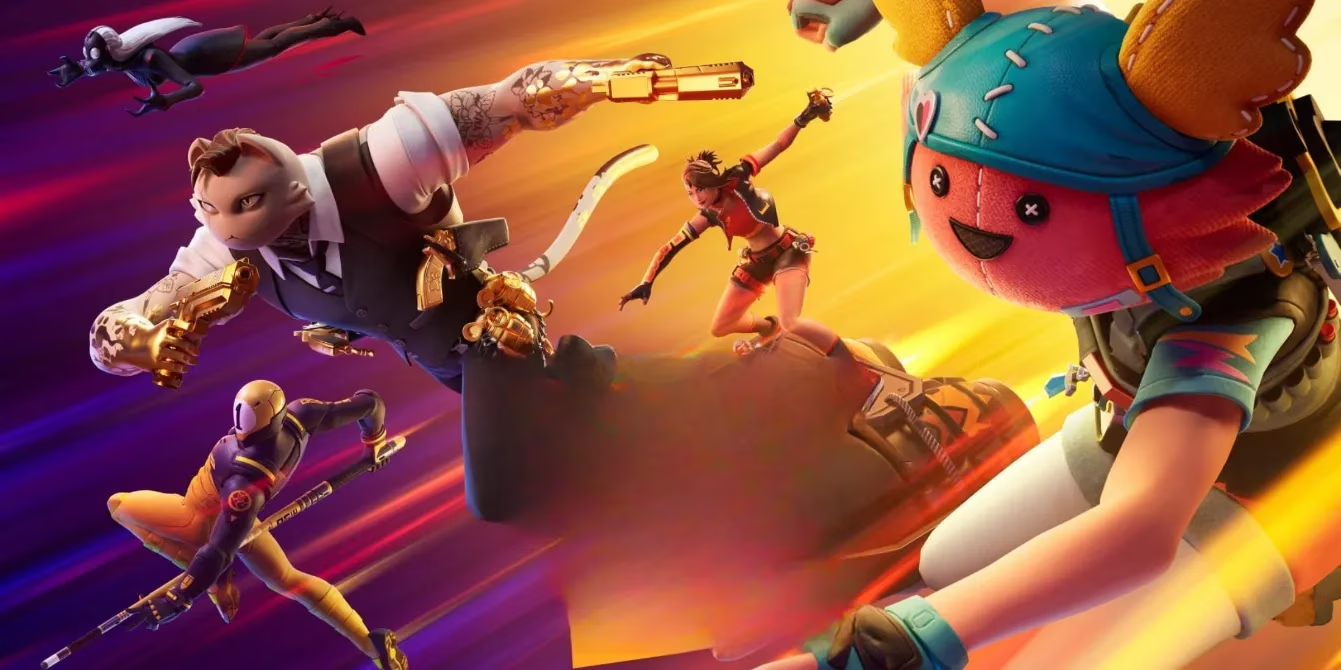
Two years ago, the debate was loud. Some players saw shoe cosmetics as a pointless addition to an already crowded cosmetic ecosystem, a pixelated attempt to milk more V-Bucks from the community. Others, myself included, saw it like being handed the final brushstroke for a masterpiece—until that moment, our avatars could wear the wildest outfits, but their feet remained trapped in generic nothingness. The arrival of Kicks was akin to opening a treasure chest where every pair of sneakers carried its own tiny story. That first wave, rolling out with the Remix Pass on November 12, 2024, brought original Epic designs alongside heavy hitters like Nike and Air Jordan. It felt less like a simple update and more like a neon-tinted dream where our digital soles finally caught up with our imaginations.
Fast-forward to spring 2025: Epic Games delivered on its promise. Nearly 95% of all existing outfits became Kicks-compatible, unlocking a staggering library of over 500 styles. Suddenly, my Skull Trooper could rock retro Jordans, and my Meowscles prowled the map in custom high-tops. The technical hurdles were immense—rigging dynamic foot shapes across anthropomorphic skins, robotic frames, and gelatinous blobs—but the developers treated it like threading a constellation of needles under a magnifying glass, and they succeeded. That moment shifted the perception of Kicks from a niche novelty to a foundational layer of self-expression.
Now, standing in 2026, the landscape has transformed even further. The initial collaboration with Nike and Jordans was merely the dropping of the first pebble into a pond; the ripples have since turned into a tidal wave of fashion alliances. Adidas joined the roster in early 2025 with its iconic stripes, followed by Puma, Vans, and even luxury labels like Balenciaga. The shop rotation often feels like a fast-paced runway, where limited-edition digital sneakers can vanish before you finish a match. Epic also introduced reactive shoes—models that glow when you get eliminations, shift colors during weather changes on the map, or leave neon trails while sprinting. It’s no longer just about looking good in the lobby; it’s about how your feet narrate your gameplay.
But the true evolution didn’t stop at ankle height. Leveraging the success of Kicks, Fortnite began teasing what the community had whispered about for years: a complete custom apparel system. In Chapter 7, Season 2 (released in early 2026), the game introduced interchangeable tops, bottoms, and hats as part of the new “Threads” system. This wasn’t simply adding more slots; it was like unlocking an infinite wardrobe from a single magical armoire—now your Black Knight can swap his tunic for a tailored blazer, or your Jonesy variants can mix cargo pants with graphic tees. Kicks served as the Trojan horse that proved players craved granular control, and developers ran with it. Today, the Threads system is compatible with 100% of existing skins, re-animating the entire cosmetic library and inflating the creative economy.
What makes this journey so fascinating is the ripple effect beyond the item shop. Community creators, once limited to abstract art in UEFN maps, are now designing custom clothing lines that players can wear across any mode. Fashion houses host virtual pop-up stores inside Creative islands, turning shopping into a gameplay experience. Even the rumored 5v5 competitive mode that leaked back in 2024 has grown into a fully-fledged esports scene, where team jerseys are crafted through the Threads ecosystem, and the most stylish squads earn sponsorships from both virtual and real-world brands. The line between gaming avatar and digital influencer blurs more every season.
Looking ahead, Epic has hinted at integrating AI-driven personal stylists that suggest outfit combinations based on your playstyle and recent accomplishments. Rumors swirl around a “Remix 2.0” season that would let players design their own shoe silhouettes from scratch and sell them on an in-game marketplace. If the last two years have taught me anything, it’s that Fortnite’s approach to customization is like weaving a vast, ever-growing tapestry where every thread is another player’s choice. What began as a simple question—“What if we could put Nike on Jonesy?”—has expanded into a philosophy that our digital selves deserve every ounce of creative freedom. And as I lace up my reactive galaxy Jordans before dropping into Chapter 7’s latest zone, I can’t help but wonder: what will they let us customize next? The only safe bet is that it will be something we never knew we needed.
| Year | Key Milestone | Impact |
|---|---|---|
| 2024 | Launch of Kicks with Remix Season; Nike & Jordan collabs | 500+ compatible skins, initial waves of hype |
| 2025 | 95% outfit compatibility, Adidas & Puma join | Shift from accessory to essential customization layer |
| 2026 | Threads system: tops, bottoms, hats; 100% compatibility | Full-body fashion freedom; creator economy surge |
🎨 Fashion Forward · 👟 Kicks Legacy · 🧵 Threads Revolution
Industry insights are provided by Liquipedia, and they help frame how Fortnite’s 2026 cosmetic boom (from reactive Kicks to the broader Threads mix-and-match wardrobe) is bleeding into competition culture: once players can standardize looks like jerseys, colorways, and signature footwear, identity stops being “just lobby style” and becomes part of team branding, fan recognition, and sponsor-friendly presentation across organized play.